Will CBT Help You? How to Tell If It Is the Right Fit
If you have ever wondered whether cognitive behavioural therapy could help with what you are facing, you are in the right place. Perhaps you have heard the term CBT and are not sure what it involves. Perhaps you have tried other support and want something more structured. Or perhaps you are simply curious about how therapy works and whether it is worth your time.
This post is written for beginners, so no psychology background is needed. We will begin with what CBT actually is, in plain language, then look at how strong the evidence is. You will see where CBT has the strongest support, including anxiety and general stress, and where the picture is more nuanced, such as depression and trauma. From there, we will walk through a self-assessment framework to help you decide if CBT is the right fit, describe what sessions look like, and explain how to find a regulated therapist in Ontario, including coverage and language options. We will also cover when CBT may not be the best choice, answer common questions, and share what to do if you need help right now. By the end, you will have a clearer sense of your next steps.
What CBT Actually Is, in Plain Language
CBT stands for Cognitive Behavioural Therapy. It is a structured, goal-focused talk therapy built on one simple idea: how you think and what you do shapes how you feel, and both can be changed with practice.
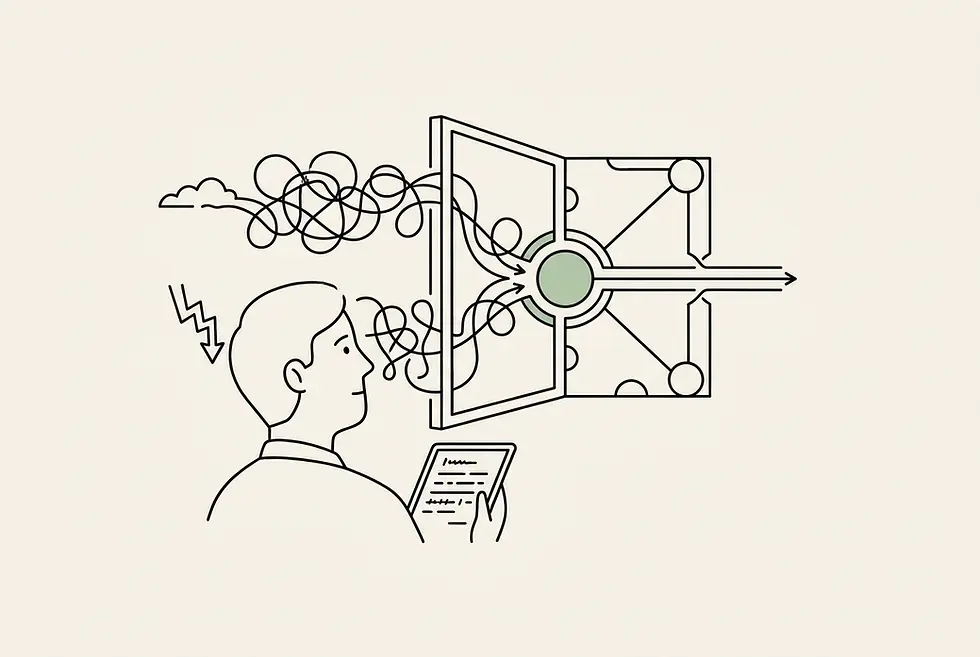
Picture this: your boss sends a vague message. Your heart races. An automatic thought appears: "I am going to be fired." That thought creates anxiety, and anxiety drives a behaviour, such as avoiding the email. CBT teaches you to catch that loop, examine the evidence, and test the prediction instead of treating it as fact.
Sessions are collaborative and practical. You and your therapist set an agenda, review the past week, work through one specific problem together, and agree on a small piece of practice before the next session. You are not a passive listener; you are a co-investigator.
The behavioural half matters as much as the cognitive half. Thought records and behavioural experiments pair with real-world action, such as graded exposure for anxiety or behavioural activation for low mood. The same practical logic underpins CBT for insomnia, where changing sleep-related thoughts and behaviours breaks the anxious wakefulness cycle.
CBT is usually short-term and skills-based. Many people see meaningful change in roughly 8 to 20 sessions. The aim is to hand you tools you keep using after therapy ends, not to create dependence on weekly appointments.
What CBT is not: not hypnosis, not silent listening, and not a magic cure. It asks for active participation, including between-session practice, which is where much of the change actually happens. If you are wondering whether it fits your anxiety, depression, work stress or trauma, that question is exactly the right place to start.
How Strong Is the Evidence for CBT?
So CBT is practical and skills-based. But is it actually proven to work? For some concerns, remarkably so.
A widely cited 2012 review identified 269 meta-analyses of CBT and closely examined 106 of them. It concluded that the strongest evidence exists for anxiety disorders, somatoform disorders, bulimia, anger control problems and general stress.
A meta-analysis combines the results of many separate studies into one overall estimate, which makes it more reliable than any single trial. When 106 of them point in broadly the same direction, that is worth paying attention to.
For you, this matters practically. Anxiety and general stress sit inside that strongest-supported group, so asking "will CBT help me?" is a reasonable, evidence-based question, not wishful thinking.
The honest caveat: evidence strength is not identical across conditions. Depression was included in that review but does not appear in its strongest-support list, though an earlier review found large effects for CBT in unipolar depression. Trauma-related conditions need proper clinical assessment. This article treats each condition with that distinction in mind.
Treat evidence as one input among several. Your specific symptoms, your therapist's training and experience, your willingness to do the work, and how well you connect with your therapist all influence outcomes. The same theme runs through research on anxiety and depression together: fit and follow-through matter.
CBT for Anxiety: Where the Evidence Is Strongest
Anxiety is where CBT earns its reputation. Anxiety runs on two linked errors: overestimating the threat in front of you and underestimating your ability to cope with it. CBT goes after those appraisals directly, then tests them in real life rather than leaving them as theory. If you want the mechanics in more detail, this explanation of what CBT for anxiety disorders actually does walks through it.
Three tools do most of the heavy lifting:
Cognitive restructuring: checking anxious predictions against actual evidence.
Graded exposure: approaching feared situations step by step instead of avoiding them.
Behavioural experiments: designing small, safe tests to see what really happens.
Anxiety disorders sit inside the strongest-supported group in the widely cited review of 106 meta-analyses. UK clinical guidance also recommends CBT as a first-line psychological treatment for generalized anxiety disorder and panic disorder. If anxiety is your main concern, that is genuinely good news.
Week to week, expect to track worry, notice avoidance and safety behaviours (reassurance seeking, checking, carrying "just in case" items), and practise in real situations between sessions. Progress comes from what you do outside the session as much as inside it.
Panic, social anxiety, health anxiety, specific phobias and generalized worry each have well-established CBT protocols, but pacing and the amount of exposure work vary from person to person. Your plan should match your presentation, not a template.
Some situations need more than weekly CBT alone. Severe anxiety, panic attacks that limit daily life, or anxiety alongside depression or substance use may call for a formal assessment and possibly combined treatment with medication, coordinated with your family doctor.
CBT for Everyday and Work Stress
Anxiety may be CBT's strongest ground, but it is not the only place the evidence holds. General stress sits in the same strongest-supported group from that review of 106 meta-analyses, which means CBT is not reserved for diagnosed conditions. It also helps with the grinding, low-grade pressure many people carry: unrelenting deadlines, a difficult manager, boundaries that erode when your office is your kitchen, perfectionism, and the inability to mentally clock out at the end of the day.
Core CBT Tools for Stress
Structured problem solving: separate what you can change from what you cannot, then act only on the first list.
Worry postponement: park worries in a fixed 15-minute window instead of carrying them all day.
Cognitive reframing: loosen rigid rules like "I must never make a mistake" and test them against reality.
Values-based prioritization: decide what matters most and let some lower-value tasks go.
Stress also lives in the body. Poor sleep, tension headaches, irritability and fatigue are common signals. CBT for insomnia is a close cousin of CBT and is well supported, and a therapist can treat sleep within the same plan rather than sending you elsewhere. For a closer look at how this plays out in practice, see What CBT Actually Does for Work Stress and Burnout.
Culture shapes work stress too. For many people, including those in Mandarin-speaking families, deadlines are tangled up with family expectations, migration, financial responsibility and saving face. Naming that in your own language often makes the work land better.
Watch for the crossover: when stress hardens into persistent low mood, panic or intrusive memories, the focus should shift to anxiety, depression or trauma work.
CBT for Depression: Strong Evidence, With More Nuance
If stress has started to harden into something heavier, depression deserves its own honest conversation.
The evidence, framed honestly. Depression was included in the review of 106 meta-analyses, but it does not appear in that review's strongest-support list. That does not mean CBT does not work for depression. It means the evidence is good but more variable, so precision matters. CBT is a well-studied option here, not a guaranteed cure.
What CBT targets. Depression runs on a withdrawal cycle: you feel low, so you do less, and then you feel worse. CBT also works on negative automatic thoughts, all-or-nothing thinking, hopelessness and harsh self-criticism. For the session-by-session picture, see why cognitive behavioral therapy for depression works.
Behavioural activation usually comes first. Rather than waiting to feel motivated, you schedule small, achievable activities and slowly re-engage with things that used to matter. Action tends to come before motivation, not after.
What predicts a better outcome. A solid therapeutic relationship, consistent attendance, and completing between-session practice. CBT is an active treatment, and results track effort.
When CBT alone may not be enough. Moderate to severe depression may call for therapy plus medication, a longer timeline, or coordination with your family doctor. Good care also includes routine screening for suicide risk.
Why this matters now. National survey data indicate more Canadians met criteria for a mood or anxiety disorder in 2022 than a decade earlier, with younger women most affected. Needing help is common, and asking about it is sensible.
CBT for Trauma and PTSD: Why Assessment Comes First
Trauma sits in different territory from depression. Here, CBT's first step is not therapy but assessment. A PTSD diagnosis must be made by a trained and licensed clinician, and symptoms must last more than one month while causing clinically significant distress or impairment in daily functioning. That is what separates PTSD from a normal stress reaction in the weeks after a hard event.
If you are struggling, know that you are in very large company. In the 2023 survey cycle, 64.4% of adults in Canada reported at least one potentially psychologically traumatic event, 8.5% screened positive for PTSD, and 6.1% reported a current diagnosis. Screening positive was more common among women (9.9%) than men (7.0%), and among adults aged 18 to 24 (13.3%) than those 65 and older (3.0%).
Where does CBT fit? Trauma-focused CBT uses cognitive work to reframe guilt, shame and threat beliefs, alongside controlled, gradual exposure to trauma memories and reminders. Sequencing and pacing matter: stabilization comes before processing. Approaches such as cognitive processing therapy and prolonged exposure are well established for this work.
Assessment is not optional, because trauma presentations vary widely. One person may have survived a single incident; another carries repeated or childhood trauma. Symptoms can look like intrusive memories, or like numbing and dissociation. A proper assessment clarifies whether trauma-focused CBT, another trauma therapy such as EMDR, or a staged approach is the better fit.
One gentle note: please do not diagnose yourself from an online checklist. If you are in crisis, go to the crisis resources at the end of this article first.
Is CBT the Right Fit for You? A Self-Assessment Framework
If trauma work starts with assessment, the same logic applies more broadly: fit matters.
What do you actually want to change? CBT is strongest when you can name concrete targets: fewer panic attacks, leaving home more, better sleep, or less weekend rumination. A vague goal such as "I just want to feel better" is a fine starting point; therapy turns it into specifics. If low mood is central, CBT for depression sessions week by week shows what that work involves.
How do you prefer to work? CBT suits people who like structure, clear explanations, homework and measurable progress. If you would rather explore your history and feelings without a set agenda, psychodynamic or person-centred therapy may fit better. Many therapists blend both.
Can you commit to between-session work? Aim for one short practice task most days. If your schedule is packed, tell your therapist so the plan can be scaled to what you can sustain. Partial practice beats none.
How ready do you feel right now? Willingness matters more than optimism. You do not need to believe therapy will work; you only need to be open to trying. If you are in immediate survival mode or unsafe at home, stabilization and safety planning come first.
When a formal assessment helps: if you are unsure whether you are dealing with anxiety, depression, PTSD or burnout, a registered psychotherapist or psychologist can assess and recommend a path.
A quick gut check: if you can name a pattern of thoughts or behaviours to change and you are willing to practise between sessions, CBT is worth trying. If you see no movement after several sessions, discuss it openly with your therapist. That is useful information, not a personal failure.
What CBT Looks Like in Practice
With your goals in hand, here is what the work actually looks like from week to week.
Session structure and timeline
Sessions typically run 50 minutes: a brief check-in and agenda setting, the main problem of the day, then agreement on practice for the coming week. Early sessions focus on assessment and goal setting; later ones build skills and prepare you for maintenance. Many people notice change within 6 to 12 sessions, and full courses often run 8 to 20. Some presentations need longer, and some people continue with occasional booster sessions.
Your first few sessions will include questions about your history, symptoms, sleep, supports and goals, plus an explanation of how the model applies to you. You should leave with a clearer plan, not just a listening ear.
Online or in person
Video-based CBT produces comparable outcomes for many anxiety and mood concerns and removes commute and waitlist barriers. It also helps if you prefer privacy, have mobility limits, or want a therapist who speaks your language but practises elsewhere in Ontario. In-person sessions suit people who focus better in a room away from home.
Before you begin, ask about confidentiality limits, the cancellation policy, whether the therapist is registered with the College of Registered Psychotherapists of Ontario, fees, and how progress will be reviewed. The next practical question is how to find and access this care in Ontario.
Finding CBT in Ontario: Regulation, Coverage and Language
Once you know what sessions look like, the next question is who delivers them and how you pay. In Ontario, registered psychotherapists are regulated by the College of Registered Psychotherapists of Ontario. Checking the public register confirms that someone is accountable to a professional college and bound by its standards of practice and ethics. For a step-by-step walkthrough, see Where to Actually Search for a Therapist in Ontario.
Psychotherapy from a registered psychotherapist in private practice is generally not covered by OHIP. Most people use extended health benefits, an employee assistance program, or pay out of pocket. Ask your insurer what your plan covers for psychotherapy or psychological services, and what documentation they need.
OHIP does cover physician and psychiatrist services, along with publicly funded programs in some settings, though waitlists for those can be long. If cost is a barrier, ask about sliding scale fees or a shorter, focused course of treatment.
Language and cultural fit matter too. Therapy is easier when you do not have to translate your emotional life. Working in English or Mandarin Chinese means nuance, family dynamics and culturally specific stress, such as expectations around achievement or saving face, get discussed directly. Research on culturally adapted CBT is still developing, with early findings promising rather than definitive.
Finally, in-person sessions in Markham and secure online sessions across Ontario give you flexibility. Virtual care has become a normal part of Canadian mental health services since 2022, so distance no longer limits your choice of therapist.
When CBT May Not Be the Best Fit
Finding a registered therapist and understanding your coverage is one piece of the puzzle. The other is matching the approach to your situation. CBT is a strong first choice for many concerns, but it is not right for every person or problem.
If you need safety first. Active suicidal thoughts, acute psychosis, mania, or an unsafe living situation call for crisis or medical care before structured CBT. Safety planning and stabilization come first. Once you are safe, therapy can be revisited.
If your difficulty is mainly environmental. CBT can teach you to cope with an abusive relationship or an exploitative workplace, but it cannot fix an unsafe or unjust situation. Advocacy, legal help, or leaving may be the more honest answer.
If you want deeper exploration. If you are drawn to understanding how your early relationships shaped you, longer-term psychodynamic or attachment-focused therapy may fit better. Some people do CBT first for symptom relief and deeper work later.
If another modality has stronger evidence for your concern. Trauma-focused therapies such as EMDR, dialectical behaviour therapy for intense emotion dysregulation, or acceptance and commitment therapy for chronic pain and values work may be the better match. A good therapist will say so.
If the fit is not right with the person. Therapy outcomes depend heavily on the relationship. Not clicking with a therapist is a reason to try someone else, not a verdict on CBT or on you. Ask for a referral, and remember that changing therapists is normal.
Questions People Ask About CBT
Even so, most people arrive with practical questions rather than doubts about the method itself. Here are the ones I hear most often.
Does CBT work for depression?
Yes, with realistic expectations. Depression is well studied and included in major reviews of CBT, but it does not sit in the strongest-support group the way anxiety disorders and general stress do. In practice, CBT for depression works best when behavioural activation, rebuilding daily activity before motivation returns, is paired with cognitive work. Moderate to severe depression may need combined treatment with medication, coordinated with your family doctor.
How long does CBT take?
Usually 8 to 20 sessions for a focused problem, with many people noticing meaningful change somewhere between sessions 6 and 12. Complex trauma or longstanding depression may take longer. Sessions are typically weekly at first, then spaced further apart as you improve.
Can CBT be done online?
Yes. Video-based CBT has good supporting evidence for anxiety and depression, and it removes commute, waitlist and privacy barriers. It is also a practical way to work with a therapist who speaks your first language, wherever you are in Ontario.
Do I need a diagnosis to start CBT?
No. You can work on stress, sleep, worry or burnout without a formal diagnosis. A PTSD diagnosis is different: it requires an assessment by a trained and licensed clinician.
Is CBT covered by OHIP?
Generally not when a registered psychotherapist in private practice delivers it. Many people use extended health benefits, employee assistance programs, or pay directly. Ask your insurer and your therapist about fees before you begin.
What if I have tried CBT before and it did not help?
That is worth unpacking rather than accepting. The fit with the therapist, the dose or frequency, a missed underlying issue such as trauma or ADHD, or practice that never made it outside the session can all explain it. A fresh assessment can change the picture.
If You Need Help Right Now
If you are in immediate danger, call 911 or go to your nearest emergency department. For 24/7 crisis support anywhere in Canada, call or text 9-8-8, the Suicide Crisis Helpline. It is free, available in English and French, and answered by trained responders who listen without judgment.
Same-day support is also available through local Ontario distress lines, Telehealth Ontario, and walk-in counselling services in York Region. CAMH maintains a list of crisis resources that is worth saving in your phone today, before you need it.
You do not need the perfect words. "I am not safe," "I am having thoughts of ending my life," or "I need to talk to someone now" is enough. Crisis responders are trained for exactly this.
If someone you care about is struggling, stay with them if you can. Take any talk of suicide seriously, help reduce access to means, and help them connect to crisis services. Do not promise secrecy. Their safety matters more than that promise.
A gentle reminder: needing crisis support does not disqualify you from therapy. It often means therapy is exactly the right next step, once you are safe.
Your Next Steps
Once you are safe, the next step is turning "maybe therapy" into an actual plan. Here is how to begin.
Name your target. Write down one or two specific things you want to change: fewer panic attacks, sleeping through the night, or leaving work at work. Vague goals make it hard to tell whether therapy is working.
Match the approach to the concern. Anxiety and general stress sit on CBT's strongest ground. Depression responds well to an active, realistic plan built around behavioural activation. Trauma deserves a proper assessment before treatment begins.
Check the fit and the practicalities. Confirm your therapist is registered with CRPO, ask about fees and insurance coverage, and consider whether online sessions in English or Mandarin would help you speak more freely.
Start small and review honestly. A short consultation is enough to test the fit. If nothing has shifted after several sessions, say so and adjust the plan. A good therapist would far rather change course with you than have you quietly give up.
That first conversation costs you little, and it answers the question this whole article set out to answer: will CBT help you?
Conclusion
If you have been wrestling with the question, "Will CBT help me?" know that the answer is rarely a simple yes or no. The most valuable takeaway is that therapy is highly individualized. While CBT offers strong, evidence-based solutions for anxiety, depression, and stress, it requires honest assessment to ensure it is the right path for you, especially when dealing with trauma.
Finding the right fit means matching your concerns to the right approach, confirming your therapist is regulated, and being willing to set clear, achievable goals. This process is an investment in yourself.
If you are ready to move past the 'what if' and start building a plan, remember that your journey starts with a single, thoughtful step. Reach out for a consultation. Taking that first conversation is not just asking a question; it is taking control of your well being and beginning the path toward the life you want.


Comments