Family Pressure and Work Stress as a Chinese-Canadian Professional: When Is It Time to Talk to Someone?
You hit every milestone your parents pointed you toward. Good grades, a respected career, a stable life in Canada. And yet, somewhere between fielding your mother's questions about your next promotion and staying late to prove yourself at work, something started to feel off. Not broken, exactly. Just... heavy.
If that sounds familiar, you are not alone. Many Chinese-Canadian professionals are quietly carrying two sets of expectations at once, the ones from family and the ones from the workplace, while navigating a cultural script that says you handle it yourself. Searching for a therapist for burnout might not even cross your mind until things feel truly unmanageable. But that is exactly the problem this post wants to challenge.
In the sections ahead, we will dig into why this dual-pressure experience is so common and so exhausting, why it is genuinely hard to talk about, and what actually happens when you work with a therapist who understands your cultural context. The goal is not to convince you something is wrong with you. It is to show you that support does not have to wait for a crisis.
The Dual Pressure System Most Chinese-Canadian Professionals Know Too Well
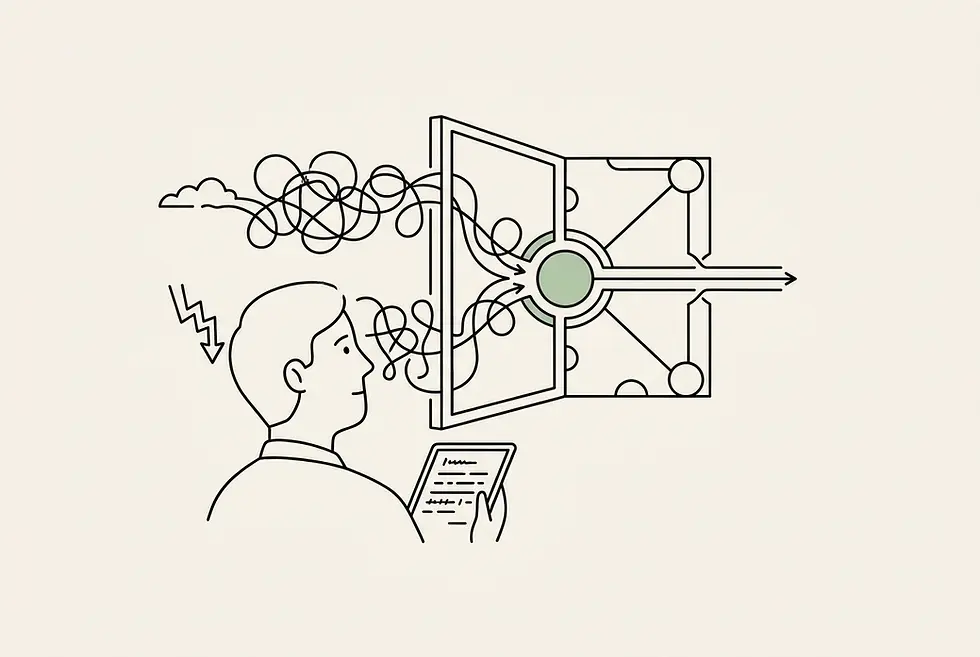
If you grew up in a Chinese-Canadian household, you likely absorbed two messages simultaneously: work hard enough and you will succeed, and struggling means you are not working hard enough. These are not separate pressures. They form a closed loop, where family achievement expectations set the baseline and workplace performance anxiety keeps raising it.
The invisible pressure of constant self-monitoring sits at the heart of this loop. The model minority myth makes it worse by turning high achievement into an assumption rather than an accomplishment. When success is expected, there is no credit for delivering it, only exposure for falling short. Admitting difficulty does not just feel uncomfortable; it can feel like personal failure, a confirmation that you are the exception who did not measure up.
Research on Chinese immigrants in Canada points to three overlapping stress sources: personal life disruption, emotional distress including fear and uncertainty, and structural obstacles. These do not arrive one at a time. They stack.
For second-generation and 1.5-generation Chinese-Canadians specifically, this stacking often happens without a safety net. Your parents built co-ethnic networks, community associations, and social ties with others who shared their migration experience. Many of their children are navigating professional life in predominantly non-Chinese workplaces, without that same communal buffer.
Research documents work-family conflict among Chinese-Canadian populations reasonably well. What remains far less examined is what happens inside the workplace itself: the impostor syndrome that flares during performance reviews, the performance anxiety that follows a single piece of critical feedback, the exhausting calculation of how much to speak up and how much to absorb quietly. These stressors are real, they are common, and most people carrying them have never had the chance to name them out loud.
Why It Is So Hard to Talk About It
The weight behind that silence is not abstract. York University research on Chinese immigrants in Canada found that shame correlated with depression at r=.66, while loss of face correlated with anxiety at r=.36 and with depression at r=.43. These are not cultural curiosities; they are measurable psychological forces that shape whether someone reaches for support or quietly absorbs more.
Keeping harmony in the family means not burdening others with your inner life. Seeking outside help can feel like a direct violation of that principle. There is also a specific story many Chinese-Canadian professionals carry: my parents gave up a great deal so I would not have to struggle. Saying "I am struggling" can feel like telling them it was not enough. Therapy, then, can feel less like self-care and more like a declaration of failure.
Layered onto that is a longstanding cultural framing of mental distress as a reflection of weak character rather than a health matter. When you have been taught, implicitly or explicitly, that emotional difficulty signals a personal flaw, it becomes genuinely hard to recognize your own symptoms as something a professional could or should address.
And for many, there is no frame of reference at all. If your parents never went to therapy, never spoke about going, and never suggested it as an option, it is not simply stigmatized. It is unfamiliar in the way that anything you have never seen modelled can be: not forbidden, just genuinely foreign.
Growing Up Between Two Sets of Expectations
Most research on Chinese mental health in Canada focuses on first-generation immigrants. But if you were born here, or arrived young, your experience is meaningfully different. Your parents built their understanding of success around sacrifice and scarcity; getting in, holding on, not complaining. Canadian workplaces, by contrast, tend to reward confident self-promotion, direct communication, and the willingness to set limits. These are not just different styles. They reflect genuinely opposing values, and you may have spent years toggling between them without a name for why it feels so exhausting.
The disorientation is subtle but real. When your manager encourages you to advocate for a promotion, and your parents' voice in your head says that drawing attention to yourself is unseemly, whose instinct do you follow? When a colleague sets a firm boundary with their boss and is praised for it, and everything in your upbringing frames that as disrespectful, how do you calibrate your own response? The confusion is not a personality flaw. It is the predictable result of internalising two incompatible scripts.
What makes this harder is the social in-between. Many second-generation professionals feel too Canadian to find comfort in traditional family structures when things get difficult, yet too shaped by Chinese cultural norms to feel fully at home in predominantly Western professional spaces.
This experience rarely gets named. Without language for it, it tends to settle into a quiet private confusion rather than something recognisable, and addressable, with the right support.
When Handling It Alone Stops Working
At some point the background noise of dual-pressure living starts showing up in your body and your work.
Burnout does not arrive as a breakdown. It builds slowly: a little less motivation each week, concentration that feels harder to sustain, an emotional resilience that keeps getting thinner. Most people rationalize it as tiredness or tell themselves a vacation will fix it. Research confirms that burnout involves measurable disruption to stress-response systems, not simply fatigue that rest can reverse.
The warning signs worth paying attention to include persistent sleep disruption, a creeping dread before work meetings or family dinners, emotional numbness where you feel strangely flat rather than distressed, and a pervasive sense that no matter how much you produce, it is never quite enough. That last one is particularly common when you are performing for two different sets of expectations simultaneously.
Physical symptoms are often the first signal that something needs attention, especially when emotional expression has been suppressed for a long time. Chronic neck and shoulder tension, recurring headaches, and gastrointestinal issues are not separate problems; they are the body translating unprocessed stress into something harder to ignore.
If you have already searched for a therapist for burnout, or found yourself looking up a burnout therapist in Toronto at midnight, that search is itself a signal. The fact that you are looking means some part of you already knows the current approach is not working.
Importantly, therapy is most effective before you reach a breaking point, not as a last resort after one. Used as a structured, ongoing practice, it helps untangle compounding pressures incrementally rather than waiting for a crisis to force your hand.
Why Cultural Context in Therapy Is Not Optional
Once you recognise that something needs to change, the next question matters enormously: change it with whom?
A therapist who has never had to carry the weight of parental sacrifice, navigate the concept of face, or represent a family's immigration story in every professional achievement will struggle to grasp what is actually at stake for you. This is not a criticism; it is a structural gap. When a client says "I can't disappoint my parents after everything they gave up," that sentence carries decades of context. Without that context, a therapist may offer reasonable-sounding advice that completely misreads the relational stakes.
Language is part of this, but it goes deeper than vocabulary. Offering sessions in Mandarin means clients can engage without the added layer of translating their inner life into a second language.
Culturally competent therapy also reframes what "simple" changes actually cost. Setting limits with a parent or advocating for yourself at work are not straightforward behavioural adjustments for Chinese-Canadian professionals. They carry real relational and social consequences that a culturally informed therapist will take seriously, rather than treat as resistance to overcome.
Mandarin-speaking registered psychotherapists in the Markham and Toronto area are not easy to find. A culturally matched fit is worth seeking out.
What Therapy Actually Looks Like for Work Stress and Family Pressure
So what does actually showing up for therapy look like, practically speaking?
The first session is not a crisis intake. There is no checklist of symptoms to qualify, no threshold of suffering you need to reach. It is simply a conversation: what has been weighing on you, and what would you like to feel differently about? That is the starting point.
Cognitive Behavioural Therapy fits this context well. It offers a structured way to examine the thought patterns driving perfectionism, performance anxiety, and self-criticism, without asking you to abandon the values your upbringing instilled. The goal is not to become a different person; it is to loosen the grip of thoughts that are no longer serving you.
CBT-based work often involves looking closely at the beliefs underneath the pressure, ones that once helped you navigate high-stakes family expectations but have since become a relentless inner critic in adult professional life, moving the goalpost no matter what you achieve. Therapy creates space to examine those beliefs directly, rather than just manage the anxiety they produce.
The practical tools that follow are specific: handling workplace anxiety without suppressing it, approaching difficult family conversations differently, and building a clearer sense of what you actually value, separate from what you were taught to want. You can explore therapy services available in Mandarin and English if you want to see what that kind of support looks like in practice.
Accessing a culturally matched therapist, whether you are searching for a burnout therapist in Toronto or a Chinese psychologist in Markham, is now possible online for professionals across Ontario regardless of where you live or work.
Progress is not linear, and it is not dramatic. Most clients notice quieter but meaningful shifts over time: what they tolerate, how they talk to themselves under pressure, and how much space they give their own needs. Small, but real.
You Do Not Have to Be in Crisis to Deserve Support
The question worth sitting with is not whether your stress is serious enough to merit support. It is whether you want to keep managing it alone.
Jing Counselling offers individual therapy in English and Mandarin, with in-person sessions in Markham and online therapy available across Ontario. The focus is on anxiety, work stress, and the specific pressures that many Chinese-Canadian professionals carry. If you have ever wanted to work with a therapist who understands the cultural background you bring into the room, that is exactly the practice this is.
Reaching out for a consultation is genuinely low-stakes. It is a conversation about what is weighing on you and whether the fit feels right, nothing more.
Choosing to address stress before it becomes a crisis is not a sign of weakness. It is the same kind of proactive, forward-thinking decision that high-achieving professionals make in every other area of their lives: you do not wait for your health to collapse before seeing a doctor, and you do not wait for your finances to fail before talking to an advisor. Your mental health deserves the same standard.
You do not have to be at a breaking point to deserve support. You just have to decide you are ready for things to feel different.
Conclusion
Carrying the weight of family expectations and workplace demands is something many Chinese-Canadian professionals navigate largely in silence. But silence has a cost.
The key takeaways from this post are straightforward: dual cultural pressure is real and cumulative; struggling does not mean failing; therapy works best when your cultural context is genuinely understood; and support does not require a crisis to be justified.
You have likely spent years being the person who figures things out. This is simply one more problem worth solving, and you do not have to solve it alone.
Frequently Asked Questions
What is the 'dual pressure system' described in the blog post?
The dual pressure system refers to the experience of Chinese-Canadian professionals carrying two sets of conflicting expectations simultaneously: family expectations rooted in sacrifice and scarcity, and workplace expectations that reward self-promotion and direct communication. This creates a closed loop where family achievement expectations set the baseline, while workplace performance anxiety keeps raising it, leading to constant self-monitoring and the feeling that no accomplishment is ever quite enough.
Why do many Chinese-Canadian professionals hesitate to seek therapy or mental health support?
Several interconnected factors contribute to this hesitation: cultural values around keeping harmony by not burdening others with personal struggles; the belief that seeking help violates family principles; guilt about telling parents 'I am struggling' after they made sacrifices; long-standing cultural framing of emotional distress as a personal weakness rather than a health issue; and lack of familiarity with therapy if it was never modeled in the family. Research shows shame correlates with depression at r=.66, creating measurable psychological barriers to seeking support.
What is the difference between being burnt out and simply being tired?
Burnout involves measurable disruption to stress-response systems and is not simply fatigue that rest can reverse. It builds slowly with warning signs including persistent sleep disruption, emotional numbness, creeping dread before work or family events, and a pervasive sense that no matter how much you produce, it is never enough. Physical symptoms like chronic neck and shoulder tension, recurring headaches, and gastrointestinal issues often emerge as the body translates unprocessed stress into tangible signals.
Why is cultural competence important in therapy for Chinese-Canadian professionals?
A culturally competent therapist understands the specific weight and context behind statements like 'I can't disappoint my parents after everything they gave up.' They recognize that changes like setting limits with parents or advocating at work carry real relational and social consequences that go beyond simple behavioral adjustments. They also understand concepts like 'face' and the immigrant sacrifice narrative. Additionally, therapy offered in Mandarin allows clients to engage without the added layer of translating their inner life into a second language.
Do I need to be in crisis or at a breaking point to justify seeking therapy?
No. The blog post emphasizes that therapy is most effective when used as a structured, ongoing practice before you reach a breaking point, not as a last resort after a crisis. You do not need to meet a threshold of suffering or reach a breakdown to deserve support. Just as you would see a doctor for preventive health care or consult a financial advisor before finances fail, your mental health deserves the same proactive approach. You simply need to decide you are ready for things to feel different.


Comments